A Ticket to Equality: Reshaping Pennsylvania Accessibility
By Sarina Mam
Every major movement in civil rights history begins with one person, in one moment, simply refusing to accept an unfair system.
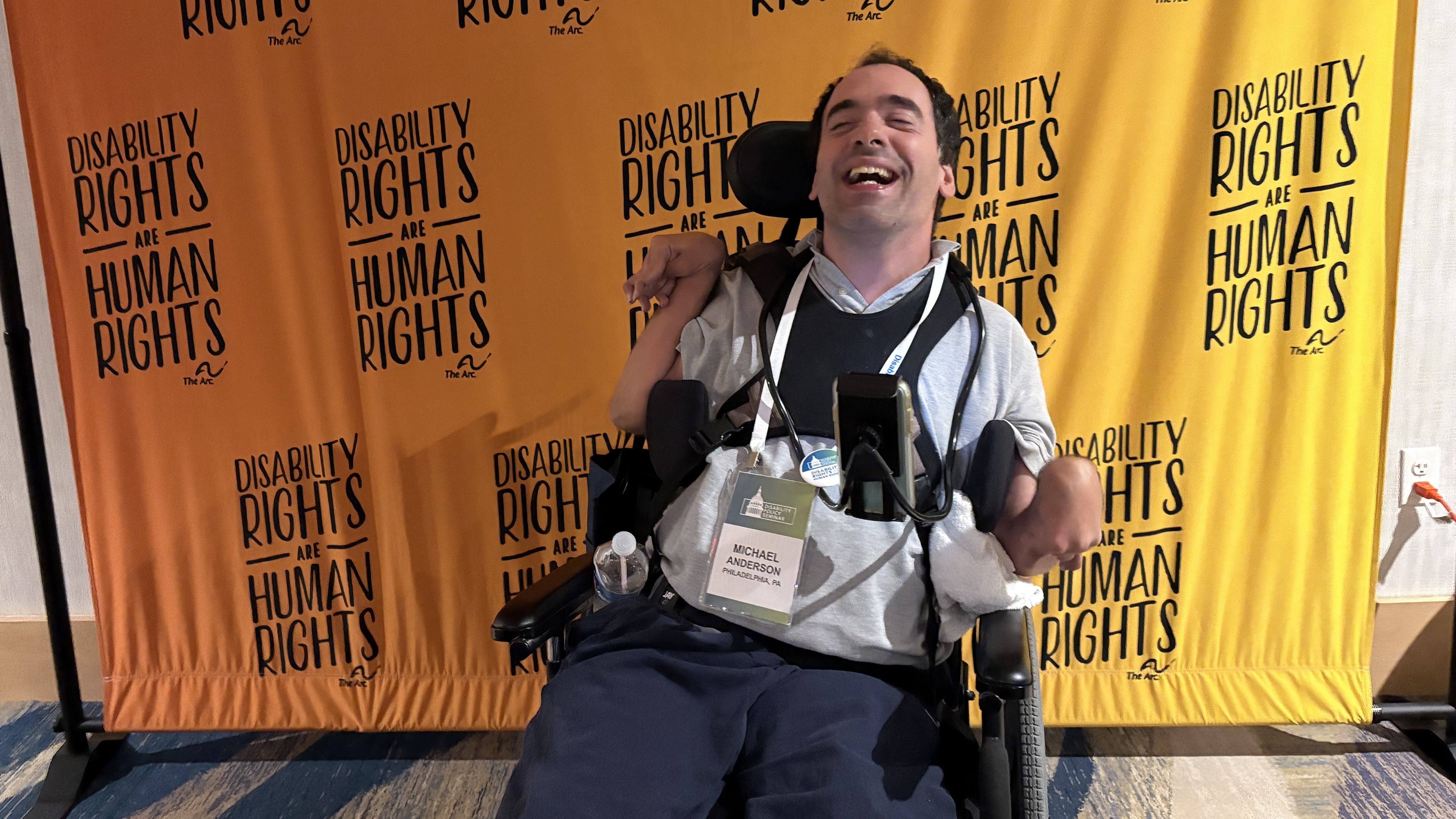
Michael Anderson, Legislative Advocate for The Arc of Philadelphia, at the 2026 Disability Policy Seminar in Washington, D.C.
For years, Michael Anderson, a legislative self-advocate for The Arc of Philadelphia, faced a frustrating reality whenever he wanted to visit a museum, theater, or sporting event. Because he relies on a personal care attendant to accompany him in public spaces, venues routinely forced him to buy two tickets–one for himself and one for his aide.
“I don’t mind paying for myself, but I felt like it was unfair to pay for my attendant,” Anderson recalled. “I felt annoyed that I had to pay for them too, because a lot of them don’t even want to go.”
Instead of quietly taking on the financial burden, Anderson decided to challenge the status quo. Over a decade ago, Anderson filed a lawsuit against a museum in the Philadelphia area, demanding that a ticket for a personal care attendant be recognized for what it truly is: a necessary accessibility accommodation.
After years of hard-fought litigation, the judge ruled in Anderson’s favor. While it was a massive personal victory, it brought a larger systemic flaw into focus. Because the ruling only applied to a single venue, thousands of Pennsylvanians with disabilities were still being forced to pay double across the state.
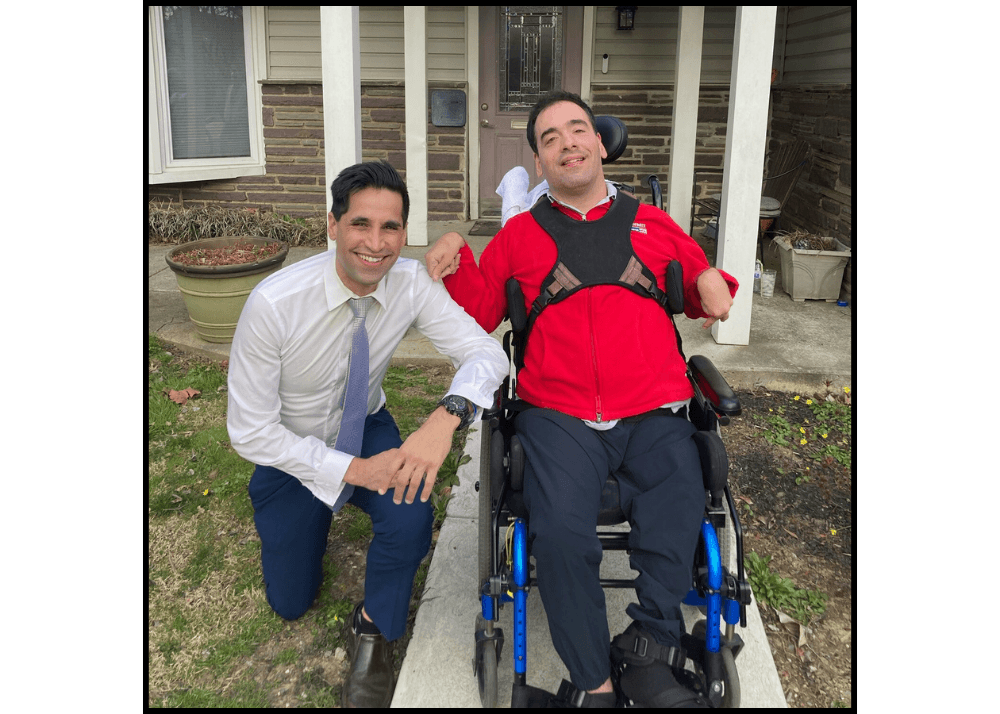
State Rep. Tarik Khan (left) with Legislative Advocate Michael Anderson (right)
Driven to turn his individual win into a statewide standard, Anderson partnered with State Representatives Tarik Khan and Mary Jo Daley to champion what became known as “Michael’s Law.” The momentum culminated in a breakthrough when the Pennsylvania Human Relations Commission (PHRC) officially adopted the policy as state regulatory guidance in June 2026. What began as one person’s day in court had officially reshaped policy across the entire state of Pennsylvania.
For Anderson, seeing an idea born from his own lived experience become state policy was an overwhelming milestone.
“It just felt really powerful and emotional,” Anderson shared. “I was crying in my head because I never thought it would even get this far. It was just an idea from one person, and it came this far, so I was very emotional inside.”
Yet, even in the middle of celebrating a historic victory, Anderson refuses to treat Pennsylvania as the finish line. For him, the state regulation isn’t the end of the story–it’s merely proof of importance for a much larger, national vision.
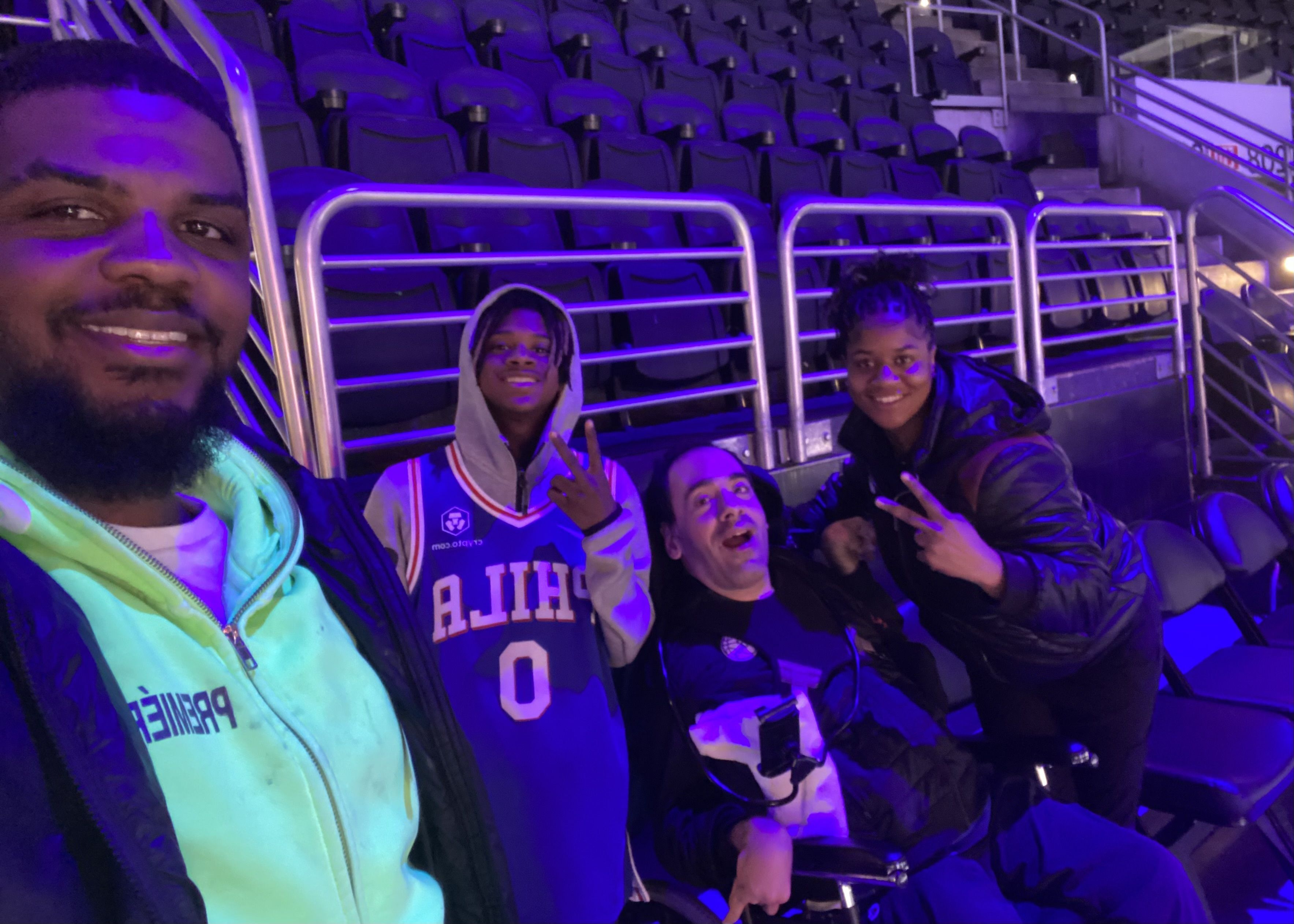
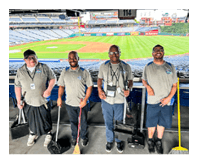
Michael Anderson (center) with his personal care attendant and staff at a 76ers game at the Xfinity Mobile Arena.
“We fought them, and we won… [but] I felt like I needed to fight even more because… my dream is to make it a national law,” Anderson said, setting his sights firmly on Capitol Hill. “I’ve done so much work, but there’s a long way to go.”
Anderson knows he can’t carry the weight alone as he is actively rallying the broader community to take the regulation to the next level: state law.
“We need more champions like me, because I can’t do it all by myself,” Anderson said. “Don’t give up and always stand up for your rights. You’re not alone.”
His directive for those looking to join the next phase of the fight is practical, direct, and forged in his own experience.
“You have to put pressure on your local lawmakers by going to their office, or you can write them a letter. Tell them how you feel about it,” Anderson advised. “When I was younger, I used to get discouraged, but my biggest advice is: do not get discouraged if you first get pushback.”
Michael Anderson proved that one person’s determination could rewrite the rules across the Commonwealth. Now, as he prepares to finish the fight in Pennsylvania, he’s making sure an entire movement is marching with him.